



Custom Software vs Off-the-Shelf: What Are the Pros and Cons?

 Updated on Dec 16, 2025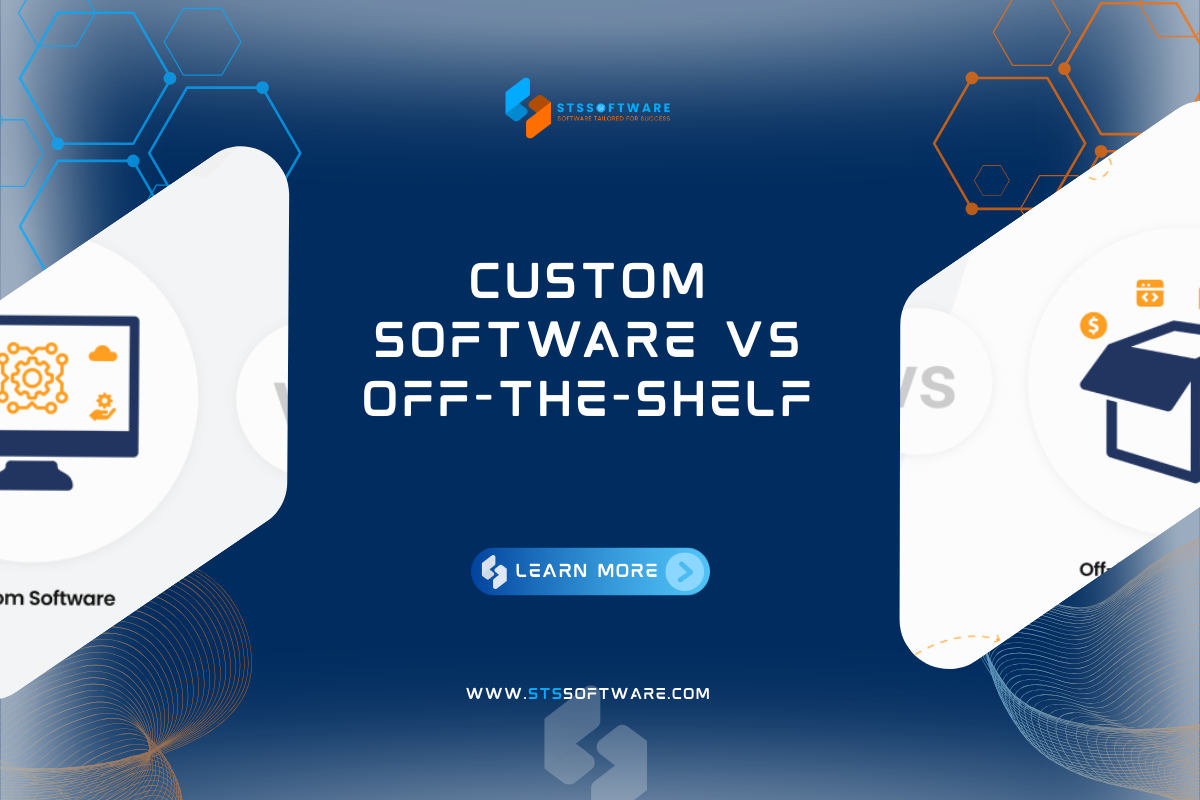
Every business leader faces the critical decision of whether to invest in generic software or a specialized system. While Off-the-Shelf (COTS) options promise quick deployment, they often create bottlenecks by forcing your unique processes into rigid, standardized features. This forces the central comparison: Custom Software vs Off-the-Shelf. A tailored system, built specifically for your operations, ensures perfect workflow alignment but requires more strategic planning.
As a leading U.S. software development company, STS Software possesses the expertise to guide this choice. We leverage modern architectures, secure cloud integrations, and the full development lifecycle to build scalable, high-performance systems. In this guide, we provide clear, authoritative insights into the costs, benefits, and long-term viability of Custom Software vs Off-the-Shelf solutions, ensuring you make the most informed decision for your business in 2025.
What Is Off-the-Shelf Software?
Off-the-shelf software consists of pre-built applications designed for a broad market. Vendors develop these tools to address common needs across industries.
Off-the-shelf software is ready-made and available immediately for purchase or subscription. It requires no development from scratch.
These solutions, such as Salesforce for CRM or QuickBooks for accounting, include standard features tested across many users. Deployment happens quickly—often in days—through cloud subscriptions or one-time licenses.
Key Characteristics of Off-the-Shelf Solutions
- Generic Design: Features target average requirements, not specific workflows.
- Vendor-Controlled Updates: Improvements and security patches come from the provider on their schedule.
- Shared Infrastructure: Multiple companies use the same core system.
This approach suits standard tasks like email management or basic project tracking.
What Is Custom Software Development?
Custom software development involves creating applications tailored to one organization’s exact requirements.
Custom software is built from the ground up to match unique processes, integrations, and goals.
The process starts with detailed requirements gathering, followed by design, coding, testing, and deployment. Tools like relational databases (e.g., PostgreSQL), frameworks (e.g., React or .NET), and APIs ensure seamless fit.
Overview of the Custom Development Process
Custom projects follow structured phases using methodologies like Agile for flexibility.
- Planning and analysis of business needs.
- Architecture design for performance and scalability.
- Iterative building and quality assurance.
- Deployment with ongoing support.
This results in ownership of the code and full control over features.
How Do Off-the-Shelf and Custom Software Differ in Purpose and Design?
Off-the-shelf software prioritizes broad appeal and fast access. Custom solutions focus on precision and long-term alignment.
Off-the-shelf tools use a one-size-fits-all model, while custom development creates a perfect fit.
| Aspect | Off-the-Shelf | Custom |
|---|---|---|
| Purpose | General industry needs | Specific business workflows |
| Design Approach | Vendor-driven, standardized | Client-driven, modular |
| Ownership | Licensed from provider | Full code ownership |
| Update Control | Vendor schedule | On-demand by your team |
Custom designs incorporate entities like user roles, data models, and integrations unique to your operations.
What Are the Advantages and Disadvantages of Off-the-Shelf Software?
Off-the-shelf solutions offer speed but come with trade-offs in flexibility.
Advantages of Off-the-Shelf Software
- Lower initial costs through shared development expenses.
- Immediate deployment reduces time to value.
- Proven reliability from widespread use and vendor support.
These make it ideal for custom software development for startups or simple needs.
Disadvantages of Off-the-Shelf Software
- Limited customization leads to workarounds.
- Ongoing subscription fees accumulate over time.
- Vendor dependency risks discontinued support or unwanted changes.
Generic features often include unused bloat, increasing complexity.
What Are the Advantages and Disadvantages of Custom Software Development?
Custom solutions provide tailored efficiency but require careful management.
Advantages of Custom Software
- Exact match to processes boosts productivity.
- Scalability supports growth without major replacements.
- Competitive edge through unique features competitors can’t replicate.
Ownership eliminates recurring licenses.
Disadvantages of Custom Software
- Higher upfront investment in development.
- Longer timeline, typically months for full build.
- Potential risks if requirements shift mid-project.
Strong planning mitigates these issues.
How Do Costs, ROI, and Total Cost of Ownership Compare?
Initial prices favor off-the-shelf, but long-term analysis often shifts the balance.
Custom software involves higher upfront costs but frequently lower total ownership over time.
Upfront Investment vs Long-Term ROI in Custom Development
Custom projects range from $75,000 to $250,000+ depending on scope. ROI comes from efficiency gains, reduced errors, and revenue growth – often 300-500% in optimized systems.
Why Custom Often Has Lower Long-Term TCO
No licensing fees or per-user charges. Maintenance stays in-house or with trusted partners.
| Cost Factor | Off-the-Shelf Example | Custom Example |
|---|---|---|
| Initial | $10,000–$50,000 + subscriptions | $100,000–$300,000 |
| Annual Fees | $20,000+ (licenses, add-ons) | $15,000–$30,000 (maintenance) |
| 5-Year TCO | $200,000+ | $150,000–$250,000 |
Hidden off-the-shelf costs include custom add-ons and training on unused features.
Why Do Scalability, Integration, and Security Matter in This Choice?
Growth exposes limitations in generic tools.
Scalability for Business Growth
Custom systems use modular architectures like microservices for easy expansion. Off-the-shelf often hits user limits or performance bottlenecks.
Seamless Integration
Custom builds direct APIs to existing databases and tools. Off-the-shelf relies on pre-built connectors, which may not cover legacy systems.
Security and Compliance
Tailored solutions implement exact controls, such as role-based access or encryption standards. Vendors handle security broadly, but you lack full visibility.
What Does the Custom Software Development Lifecycle Look Like?
Successful custom projects follow proven phases.
Phase 1: Planning and Requirements
Gather detailed needs, define goals, and map entities like data flows.
Phase 2: Design, Development, and Testing
Create architecture, code features, and run rigorous QA including unit and integration tests.
Phase 3: Deployment and Maintenance
Launch with training, then provide ongoing updates and support.
Agile iterations ensure alignment throughout.
How Do You Choose the Right Development Partner?
Partner selection impacts project success.
Key criteria include:
- Proven industry experience in similar projects.
- Expertise in relevant tech stacks (e.g., cloud platforms, secure APIs).
- Stable team with clear communication and post-launch support.
STS Software excels in these areas, delivering reliable custom solutions.
When Should You Choose Off-the-Shelf vs Custom Software?
Off-the-shelf works for standard, short-term needs. Custom shines for unique processes or growth plans.
Choose custom when:
- Workflows differ significantly from industry norms.
- Integration with proprietary systems is essential.
- Long-term efficiency outweighs quick setup.
Real-world examples: Healthcare providers build custom patient portals for compliance. Retailers use off-the-shelf for basic e-commerce but custom for inventory optimization.
Conclusion
Choosing between custom and off-the-shelf software depends on your current needs, budget, and future goals. Off-the-shelf delivers speed and simplicity for common tasks. Custom development offers precision, scalability, and ownership that drive lasting advantages.
At STS Software, we specialize in turning complex requirements into efficient, secure systems. Whether enhancing integrations or building scalable architectures, our team ensures your solution fits perfectly and evolves with your business.
Ready to explore custom options? Contact us to discuss how tailored software can support your growth in 2025 and beyond.
FAQ
Can off-the-shelf software be customized later if needs change?
Limited modifications are possible through add-ons or configurations, but core changes require vendor approval or third-party work, often at extra cost.
How long does custom software typically last before needing a major overhaul?
Well-built custom systems last 7–10 years or more with regular updates, compared to off-the-shelf tools that may force migrations every 3–5 years due to vendor changes.
Is custom software more secure than off-the-shelf options?
Custom allows targeted security measures like custom encryption and audits specific to your risks, while off-the-shelf benefits from broad testing but exposes you to shared vulnerabilities.
What if my business is small—does custom software still make sense?
For startups with unique ideas, a minimum viable custom product can provide early differentiation. Many start with off-the-shelf and transition as they scale.
How does AI integration differ between the two approaches?
Custom software seamlessly embeds AI tailored to your data and processes. Off-the-shelf adds AI as generic modules, limiting depth and accuracy.
Are there hybrid options combining both?
Yes—many businesses use off-the-shelf cores with custom extensions for specific gaps, balancing speed and fit.
What role does cloud deployment play in this decision?
Both support cloud, but custom optimizes costs and performance for your exact usage patterns, avoiding overpayment for unused capacity in off-the-shelf plans.
How can I accurately forecast ROI for a custom project?
Track metrics like process time savings, error reduction, and revenue from new features over 3–5 years against total costs.
Does custom software require in-house technical expertise?
Not necessarily—reliable partners like STS Software handle maintenance, allowing you to focus on business operations.
What trends in 2025 make custom software more appealing?
Rising focus on data privacy, AI-driven processes, and seamless omnichannel experiences favor tailored solutions over generic tools.


Related articles
Ultimate Guide for Custom Enterprise Software Development
 Bruce Pham
  09 Dec 2025
Software Development Hourly Rates: Complete 2025 Enterprise Guide
03 Dec 2025 
Custom ERP Software Development: Cost, Timeline & Process
30 Nov 2025 
Custom Software Development for Startups
28 Nov 2025 
Custom POS Software Development: Cost, Process & Integration Guide of Point of Sale
27 Nov 2025 
Full-Cycle Custom Software Development – The Complete 2025 Guide
25 Nov 2025 
Custom Software Development Process: Step-by-step Guide for Business
25 Nov 2025 
Custom Banking Software Development Services: The Guide to Financial Industry
19 Nov 2025 
Custom Logistics Software Development: Guide to Efficiency & Supply Chain Control
17 Nov 2025 


