




Custom Software Development Process: Step-by-step Guide for Business

 Updated on Dec 16, 2025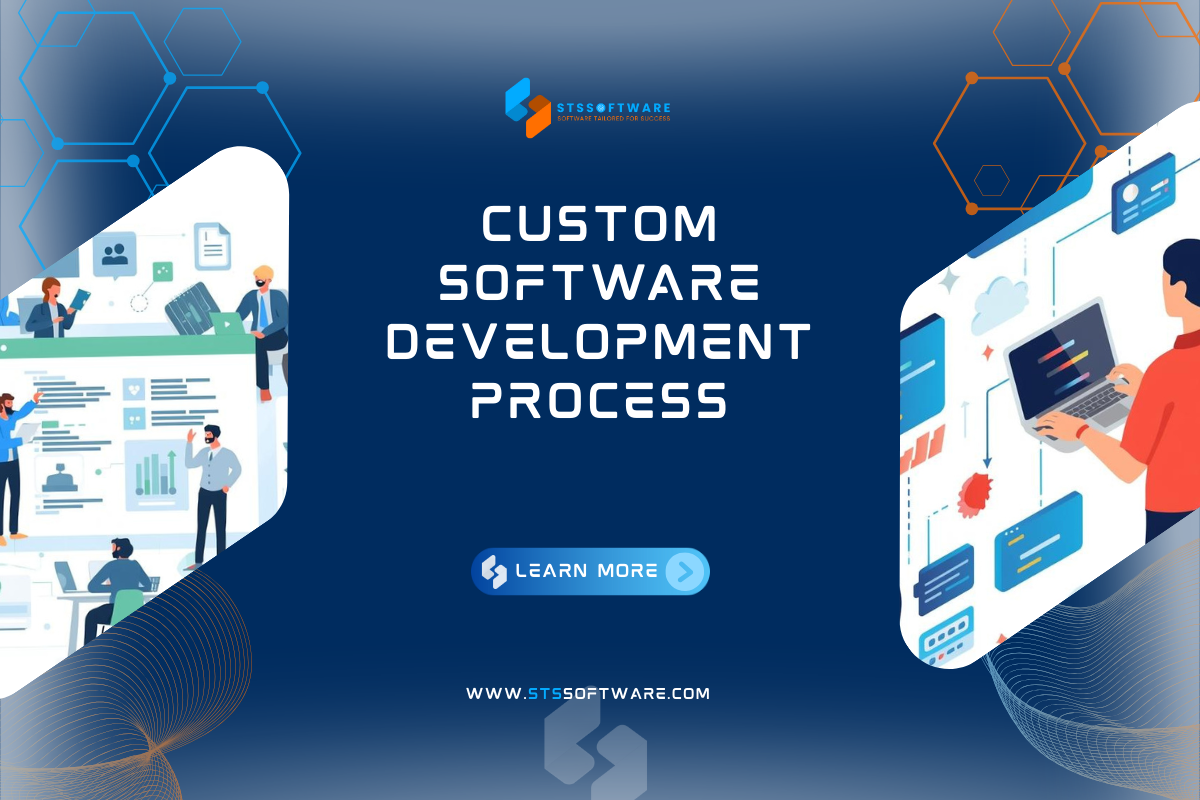
Are you tired of off-the-shelf software that doesn’t quite fit your business needs? It often leads to wasted time, extra costs, and frustrated teams trying to force square pegs into round holes. That’s where the custom software development process comes in.
This structured approach helps create tailored solutions that align perfectly with your unique goals, workflows, and challenges. Whether you’re a small startup or a large enterprise, understanding this process can turn your ideas into reliable, scalable tools that drive growth.
In this guide, we’ll break it down step by step. You’ll learn what the custom software development process involves, why it’s essential for minimizing risks and maximizing value, and the key factors to consider before starting. We’ll also walk through a proven six-phase execution plan based on industry best practices.
By the end, you’ll see how this method reduces uncertainty, ensures quality, and delivers software that truly supports your business. If you’re dealing with inefficient systems or planning a new project, this will help you make informed decisions and avoid common pitfalls. Let STS Software dive in and explore how to build software that works for you.
What is the Custom Software Development Process?
The custom software development process is a clear, step-by-step framework that turns business ideas into functional software designed specifically for your needs. It’s rooted in flexible methods like Agile, which promote ongoing collaboration between your team and developers. This iterative cycle breaks down complex projects into manageable parts, allowing for adjustments along the way.
At its core, this process focuses on understanding your requirements, designing solutions, building them securely, testing thoroughly, and maintaining them over time. It minimizes risks by catching issues early and ensures the end product matches your objectives perfectly. Unlike generic software, custom builds address unique pain points, such as integrating with existing tools or handling specific data volumes.
Think of it as a roadmap that replaces guesswork with predictability. For businesses, this means better control over timelines, budgets, and outcomes. In the sections below, we’ll explore why this structure is vital and how it delivers real benefits.
Why the Software Development Process Matters with your Business?
A solid software development process acts as a safeguard for your project. Without it, things can spiral into delays, extra costs, and features that miss the mark. But with a structured approach, you gain tools to handle these challenges head-on.
First, it helps mitigate risks, which is an important point.
Scope creep—where projects grow beyond original plans—happens often, but regular check-ins and defined milestones keep everything in check. This prevents budget overruns by focusing resources on what’s essential.
Quality assurance is another big win. Instead of testing only at the end, the process weaves in checks at every stage. This leads to cleaner code and fewer bugs, saving time on fixes later.
Clients stay in the loop too. Transparent updates and decision points give you visibility, so you can provide input and steer the direction. Overall, this builds trust and ensures the software evolves with your needs.
Read more: custom pos software development
The Strategic Value: Key Advantages and Benefits of the SDLC
The Software Development Life Cycle (SDLC) brings measurable returns on investment. It streamlines efforts, cuts waste, and boosts efficiency, making your software a true asset.
For instance, businesses see faster time-to-market because planning upfront identifies shortcuts without sacrificing quality. It also improves team productivity by clarifying roles and workflows.
In terms of ROI, a well-run SDLC reduces long-term costs through scalable designs that grow with your company. Plus, it enhances user satisfaction, leading to higher adoption rates and better business outcomes.
The Benefits of the Software Development Lifecycle (SDLC) Include:
The SDLC isn’t just a checklist—it’s a foundation for success. Here’s what it delivers:
- Predictable Delivery: Set clear timelines and milestones so you know when features will roll out, helping with planning and launches.
- Reduced Total Cost of Ownership (TCO): Clean, documented code means easier updates and fewer expensive repairs down the line.
- Higher User Adoption: By focusing on real user needs from the start, the software feels intuitive, encouraging teams to use it fully.
- Better Governance: Defined roles and reporting keep everyone accountable, from developers to stakeholders.
The 6-Phase Custom Development Process
Now, let’s get into the hands-on part. This six-phase plan provides a clear path for turning plans into reality. It’s flexible, often using Agile for quick iterations.
Each phase builds on the last, with built-in reviews to keep things on track. Below, we’ll detail what happens in each.
Phase 1: Strategic Discovery and Requirements Alignment
- This kickoff phase solidifies your vision into a concrete plan. The goal is to align everyone on objectives and create an actionable blueprint.
- Gather input from stakeholders to define needs. This ensures the software solves real problems.
Formalizing the Blueprint: Scope, Budget, and Risk Assessment
- Start with the “why”—set goals and success metrics. Then, evaluate technical feasibility and choose the best architecture.
- Assess risks like timeline slips or tech limitations. This leads to a defined scope and budget that everyone agrees on.
Phase 2: User Experience (UX) and Interface (UI) Design
- Here, focus on making the software easy to use. Good design drives adoption and reduces training time.
- Create layouts that prioritize user flow. This phase ensures the interface is intuitive and visually appealing.
High-Fidelity Prototyping and Visual Design
- Build wireframes to map information architecture. Then, develop detailed prototypes for testing.
- Get early feedback from users to validate ideas. This iterative step refines the design before coding begins.
Phase 3: Technical Architecture and Infrastructure Setup
- Set up the backbone for development. The aim is a secure, scalable foundation that supports the entire project.
- Choose tools and environments that fit your needs, whether cloud-based or on-premise.
Implementing DevOps and CI/CD Pipelines
- Configure development, staging, and production setups. This allows for smooth testing and deployments.
- Incorporate continuous integration and delivery (CI/CD) to automate builds and reduce errors.
Phase 4: Core Development and Iteration (Agile Sprints)
- This is where the code comes to life. Using short sprints, teams build features incrementally for faster progress.
- Maintain transparency with regular updates. This keeps the project agile and responsive to changes.
Continuous Communication and Code Quality Assurance
- Develop back-end logic and APIs first. Then, layer on the front-end for user interactions.
- Hold daily meetings and code reviews to catch issues early. This ensures high-quality, maintainable code.
Phase 5: Quality Assurance (QA) and Risk Mitigation
- Test rigorously to confirm reliability. The focus is on performance, security, and user satisfaction.
- Run various tests to simulate real-world use. This phase guarantees the software is ready for launch.
Security and Penetration (Pen) Testing
- Perform functional and integration tests to verify features work together.
- Conduct performance checks under stress. Include penetration testing to uncover vulnerabilities.
- Finally, user acceptance testing (UAT) gets client approval before moving forward.
Phase 6: Deployment, Launch, and Continuous Evolution
- Wrap up with a smooth rollout. The goal is minimal disruption and ongoing support for long-term success.
- Plan the go-live carefully. Then, monitor and update as needed.
Long-Term Maintenance and Feature Backlog Management
- Use zero-downtime strategies for deployment. Set up monitoring tools to track performance post-launch.
- Manage a backlog of future features. Provide ongoing support to handle bugs and enhancements.
Critical Planning: What Factors to Consider While Building Custom Software?
Before diving into development, smart planning sets the stage. Ask the right questions to shape your project, control costs, and avoid surprises.
This phase influences everything from scope to final expenses. Consider your goals, potential hurdles, and how the software will evolve.
Scope, Complexity, and Scalability Targets
- Define your Minimum Viable Product (MVP) early. This focuses on core features, letting you launch faster and gather feedback.
- Assess complexity next. If your software needs advanced algorithms or heavy data processing, plan for the right tech stack.
- Future-proofing is crucial. Design architecture that scales with user growth or data increases, ensuring long-term viability.
The Compliance and Security Mandate
- Regulations like HIPAA or GDPR can’t be ignored. Factor in compliance from day one to avoid legal issues.
- Security isn’t an add-on—embed it in the design. This includes costs for robust features like encryption and access controls.
Integration Strategy and Data Migration
- Map out connections to existing systems, such as ERPs or CRMs. Identify known and hidden challenges to prevent integration failures.
- Data migration adds layers. Plan for transferring historical data smoothly, considering volume and format to minimize disruptions.
Partnering for Success
In summary, the custom software development process is your key to building software that drives real business value. By following a structured, iterative approach, you minimize risks, ensure quality, and create solutions that scale with your needs. From discovery to deployment and beyond, each step builds toward predictable success.
At STS Software, a leading software development company in the USA, we specialize in guiding businesses through the custom software development services. Our team delivers tailored solutions that align with your goals, using proven methods to keep projects on track and within budget.
FAQ about Custom Software Development Process
How long does a typical custom enterprise software development process take?
Timelines vary based on project size and complexity. A simple MVP might take 3-6 months, while full enterprise systems could span 9-18 months or more. Factors like team size, tech choices, and iterations play a role. Early planning helps set realistic expectations.
What are common challenges in the steps of custom software development process?
Challenges include changing requirements mid-project, integration issues with legacy systems, and ensuring data security. To overcome them, use flexible methodologies like Agile, conduct thorough audits upfront, and involve experts in compliance.
How does the detailed custom software development process differ for startups vs. large companies?
Startups often prioritize speed and MVPs to test ideas quickly, with lean teams and cloud tools. Large companies focus on scalability, compliance, and integrations, involving more stakeholders and rigorous testing. Both benefit from customization, but scale adjusts the depth.
What tools are commonly used in the custom software development process?
Popular tools include Jira for project management, Git for version control, AWS or Azure for cloud infrastructure, and testing frameworks like Selenium. These streamline collaboration, coding, and QA, but selection depends on your tech stack.
How can businesses measure success after completing the custom software development process?
Track metrics like user adoption rates, ROI through cost savings, system uptime, and performance improvements. Surveys for user feedback and analytics on feature usage provide insights. Regular reviews ensure ongoing alignment with business goals.


Related articles
Custom Software vs Off-the-Shelf: What Are the Pros and Cons?
 Bruce Pham
  10 Dec 2025
Ultimate Guide for Custom Enterprise Software Development
09 Dec 2025 
Software Development Hourly Rates: Complete 2025 Enterprise Guide
03 Dec 2025 
Custom ERP Software Development: Cost, Timeline & Process
30 Nov 2025 
Custom Software Development for Startups
28 Nov 2025 
Custom POS Software Development: Cost, Process & Integration Guide of Point of Sale
27 Nov 2025 
Full-Cycle Custom Software Development – The Complete 2025 Guide
25 Nov 2025 
Custom Banking Software Development Services: The Guide to Financial Industry
19 Nov 2025 
Custom Logistics Software Development: Guide to Efficiency & Supply Chain Control
17 Nov 2025 


