




 Updated on Dec 16, 2025
Starting a company is hard. 90% of startups fail, and most die because they never achieve product-market fit (PMF). You have limited cash, a ticking runway, and investors asking for traction. The last thing you need is software that looks good on day one but collapses when real users arrive—or forces you to rebuild everything at Series A.
That’s exactly what happens with no-code tools, templates, or poorly planned custom builds. Custom software development for startups—when done right—solves this. It gives you a lean, scalable MVP that proves your idea, delights early users, and grows without needing a complete rewrite later.
This 2025 guide is written for those who want from pre-seed to Series A who need custom software development services for startups they can actually afford. You’ll discover why custom beats no-code for real differentiation, how to build an MVP that gets you to PMF fast, proven lean/agile tactics, exact costs and timelines, and how to protect your runway with smart risk mitigation. Let’s dive in.
Why Is Custom Software Essential for Startup Differentiation?
Custom software is essential for startup differentiation because it allows you to build a unique product that perfectly addresses specific market gaps. By aligning the technology precisely with your business model, you achieve Product-Market Fit faster, maintain full control over intellectual property (IP), and ensure the platform is built for future scalability.
Most founders start with Bubble, Webflow, or Firebase because they’re fast and “free.” That works until you hit one of these walls:
- You can’t build the exact workflow that makes your idea 10× better than competitors.
- Performance slows to a crawl after 1,000 users.
- The platform owns part of your IP or locks you into pricing that kills margins.
- Investors see “no-code” and immediately worry about defensibility.
Custom startup software development fixes all of that. You own 100% of the code, you can patent core algorithms, and you design the architecture to scale from 100 users to 10 million without a rebuild.
Real-world examples in 2025:
- Airbnb started with custom Ruby on Rails (not a no-code tool) so they could invent the exact booking flow that felt magical.
- Stripe built their entire payment engine custom instead of white-labeling someone else’s—today that moat is worth billions.
- Modern unicorns like Ramp, Deel, and Mercury all chose custom software development companies for startups early because they needed workflows no off-the-shelf tool offered.
Custom doesn’t mean expensive or slow when scoped correctly. It means defensible, fast-to-iterate, and investor-ready.
How Do You Build a Successful MVP for Product-Market Fit?
A successful MVP focuses only on the minimum features needed to solve the core user problem. It must be built to be robust but minimal, prioritizing user validation and rapid iteration using a lean/agile methodology to prove the business model before seeking further investment.
The #1 mistake founders make is building too much. An MVP is not a smaller version of your final product—it’s an experiment to answer one question: “Are we solving a problem people will pay for?”
Step-by-Step MVP Framework That Actually Works
- Technical Discovery (1–3 weeks) Run workshops with a senior engineer + product person. Use user story mapping to identify the riskiest assumption (e.g., “People will upload expense receipts via mobile”).
- Define the “One Thing” Your MVP must do one thing really well. Not five things okay. Example: Dropbox’s first MVP was a 3-minute video + waiting list. Superhuman’s was a concierge service before any code.
- Choose the Right Scope Typical startup MVP feature set (2025 standard):
- User authentication (email + social)
- Core value proposition (1–3 screens)
- One key integration (Stripe, Twilio, etc.)
- Basic analytics dashboard
- Mobile-responsive web or native iOS/Android (choose one first)
- Build with Scalability in Mind from Day One Use cloud-native architecture (AWS/GCP + serverless where possible), microservices for critical paths, and CI/CD pipelines. This prevents the dreaded “Series A rewrite.”
- Launch & Measure Get 100–1,000 real users fast. Track activation rate, retention (Day 1/7/30), and NPS. If metrics move, double down. If not, pivot or kill.
Why is the Lean/Agile Approach Best for Startups?
The lean/agile methodology is optimal because it prioritizes flexibility and speed. It uses short development cycles and continuous user feedback to quickly validate hypotheses, minimizing wasted effort and providing built-in budget & risk mitigation against building the wrong product.
Waterfall kills startups. Lean + Agile saves them.
Key practices we use with every startup client in 2025:
| Practice | How It Helps Startups | Real Impact |
|---|---|---|
| 2-week sprints | Ship working software every 14 days | Constant feedback, no 6-month surprises |
| Daily stand-ups | 15-minute sync (remote-friendly) | Issues surface instantly |
| User story mapping | Visualize the entire journey before coding | Prevents feature creep |
| Continuous Integration/CI/CD | Automated testing + one-click deploys | Zero downtime, confidence to ship |
| Timeboxing | Hard deadlines per feature (e.g., 40 hours max) | Protects runway |
| Build-Measure-Learn loop | Launch → collect data → iterate | Proven by Dropbox, Airbnb, IMVU |
What Are the Key Strategies for Custom Development Budget & Risk Mitigation?
Effective risk mitigation strategies include defining a tight fixed scope for the MVP, using timeboxing for each feature, and ensuring a technical discovery phase prevents costly assumptions. This disciplined approach maximizes limited budget & risk resources.
Startups die from runway exhaustion more than bad ideas. Here are the exact tactics top custom software development companies for startups use in 2025:
- Fixed-Scope + Time-and-Materials Hybrid Lock the feature list (fixed scope) but pay hourly for flexibility. This gives predictability without rigidity.
- Technical Discovery Deposit ($5k–$15k) Paid 2–4 week phase that produces:
- Clickable prototype (Figma)
- Technical architecture diagram
- Exact quote with ±10% accuracy
- Risk register Most reputable firms credit this against the final project.
- Timeboxing Every Feature Example: “Expense parsing via OCR = max 80 hours.” If it’s not done, ship the simpler version (manual upload).
- Weekly Budget Burn Report Transparent Notion or Google Sheet showing hours used vs. remaining runway.
- Kill Switches & Feature Toggles Build experimental features behind flags—so you can disable them without breaking production.
- Start with One Platform Web-first or mobile-first (not both). You can always add the second after traction.
- Open-Source Where Possible Use battle-tested libraries (Next.js, Supabase, Clerk, Stripe) to reduce development time 30–40%.
These strategies routinely keep projects under budget and on time.
Read more: custom software development process
How Much Does a Custom Startup MVP Cost and What is the Timeline?
A custom MVP typically costs between $40,000 and $120,000, based on complexity and platform. The initial development timeline is usually 3 to 6 months. This range reflects the critical balance between achieving product-market fit and adhering to strict startup budgets.
| MVP Type | Cost Range | Timeline | Typical Use Case |
|---|---|---|---|
| Simple SaaS / Marketplace | $40,000 – $70,000 | 8–14 weeks | Admin dashboard + basic user flow |
| Mobile-first consumer app | $60,000 – $100,000 | 10–16 weeks | iOS/Android with auth + one core feature |
| Fintech / Healthtech MVP | $90,000 – $150,000 | 14–24 weeks | Compliance + payments + data sensitivity |
| AI-powered product | $100,000 – $200,000+ | 16–28 weeks | Custom ML models + inference |
Factors that move the price:
- Team location (U.S. $120–$180/hr | Eastern Europe/LatAm $50–$80/hr)
- Native iOS/Android vs. React Native/Flutter
- Number of third-party integrations
- Compliance needs (SOC 2, HIPAA, GDPR)
Ways to Reduce Cost Without Sacrificing Quality
- Start web-only (add mobile later) → saves 30–40%
- Use Supabase/PostgreSQL instead of custom backend → saves 20%
- Choose battle-tested UI kits (Tailwind + Shadcn) → saves 15%
- Defer nice-to-haves (analytics, advanced search) to post-PMF
Realistic Payment Structures Startups
- 20% upfront (after discovery)
- 30% at end of design sprint
- 30% at beta launch
- 20% at public launch + 30-day warranty start
How to Choose the Right Custom Software Development Company for Startups
Not all agencies understand startup constraints. Here’s your checklist:
| Must-Have | Red Flags |
|---|---|
| 50%+ of clients are startups | Only enterprise logos |
| Offers paid discovery | “We’ll start coding tomorrow” |
| Transparent pricing & weekly demos | Fixed bid with no breakdown |
| Engineers in your time zone | 100% offshore with poor communication |
| Experience shipping MVPs < 4 months | Average project 9+ months |
Planning for Scalability and Avoiding Technical Debt from Day One
The biggest regret we hear from Series A founders: “We have traction but our codebase is spaghetti.”
Fix it early with these non-negotiables:
- Cloud-native (AWS/GCP/Azure) + serverless where possible
- Microservices for the riskiest 20% of features
- TypeScript + Next.js or Remix on the frontend
- PostgreSQL + Prisma or Django backend
- CI/CD with GitHub Actions or Vercel
- Monitoring (Sentry, Datadog, PostHog) from week one
- Automated tests ≥ 70% coverage
Do this in the MVP and scaling to 1M users costs 10–20% extra engineering time instead of a $2M+ rewrite.
Conclusion
Custom software development for startups isn’t a luxury—it’s the fastest, safest way to prove product-market fit, protect your IP, and build something investors get excited about. When combined with lean/agile methodology, fixed-scope discipline, and a technical discovery phase, you dramatically increase your odds of success while staying within runway.
At STS Software, a U.S.-based custom software development company for startups, we’ve launched over 80 MVPs that went on to raise Seed or Series A rounds. We specialize in custom software development services for startups that need to move fast, stay lean, and build defensibly.
Ready to turn your idea into a scalable, fundable product? Book a free 30-minute discovery call or get an MVP quote in 48 hours.
FAQ – Custom Software Development for Startups
Should a startup choose custom code or use a no-code platform?
No-code is perfect for landing pages or internal tools. Choose custom when your core value proposition cannot be built (or differentiated) on someone else’s platform.
What is the fastest way to build a Minimum Viable Product?
2-week technical discovery – 8 – 12 weeks of lean/agile development → beta launch to 100–500 real users. Total: 10–16 weeks for most startups.
How does a lean/agile approach reduce startup failure risk?
It forces you to test assumptions with real users every 1–2 weeks instead of building for 9 months in a vacuum.
How long is the typical timeline for a startup’s first product?
3–6 months from kickoff to public launch is the sweet spot in 2025.
What are the best risk mitigation strategies for a startup’s budget?
Paid discovery, fixed-scope MVP, timeboxing, weekly demos, and milestone-based payments.
How do you ensure the custom software will scale?
Cloud-native architecture, microservices for critical paths, automated CI/CD, and monitoring from day one.


Related articles
Custom Software vs Off-the-Shelf: What Are the Pros and Cons?
 Bruce Pham
  10 Dec 2025
Ultimate Guide for Custom Enterprise Software Development
09 Dec 2025 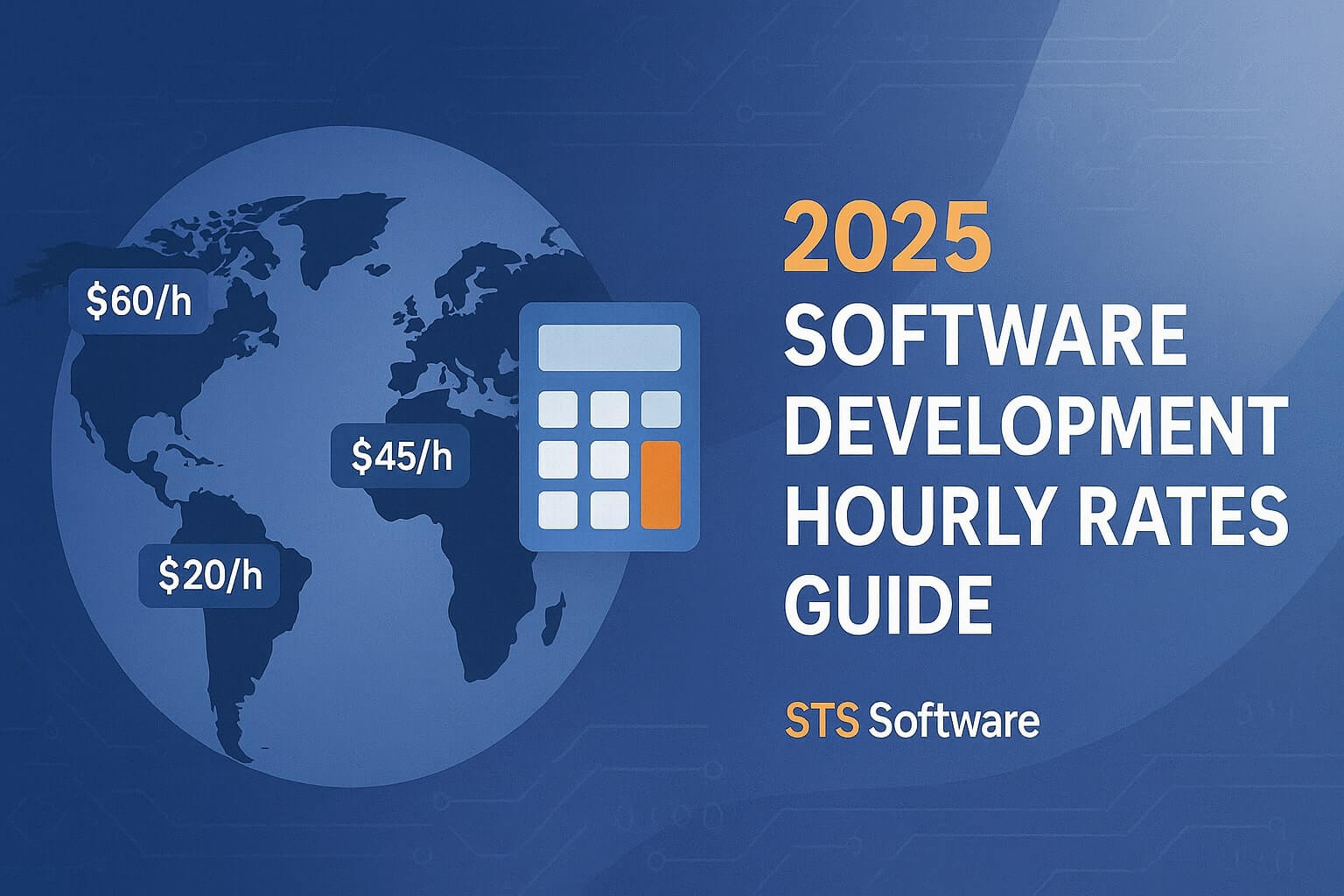
Software Development Hourly Rates: Complete 2025 Enterprise Guide
03 Dec 2025 
Custom ERP Software Development: Cost, Timeline & Process
30 Nov 2025 
Custom POS Software Development: Cost, Process & Integration Guide of Point of Sale
27 Nov 2025 
Full-Cycle Custom Software Development – The Complete 2025 Guide
25 Nov 2025 
Custom Software Development Process: Step-by-step Guide for Business
25 Nov 2025 
Custom Banking Software Development Services: The Guide to Financial Industry
19 Nov 2025 
Custom Logistics Software Development: Guide to Efficiency & Supply Chain Control
17 Nov 2025 


