




Custom Logistics Software Development: Guide to Efficiency & Supply Chain Control

 Updated on Dec 16, 2025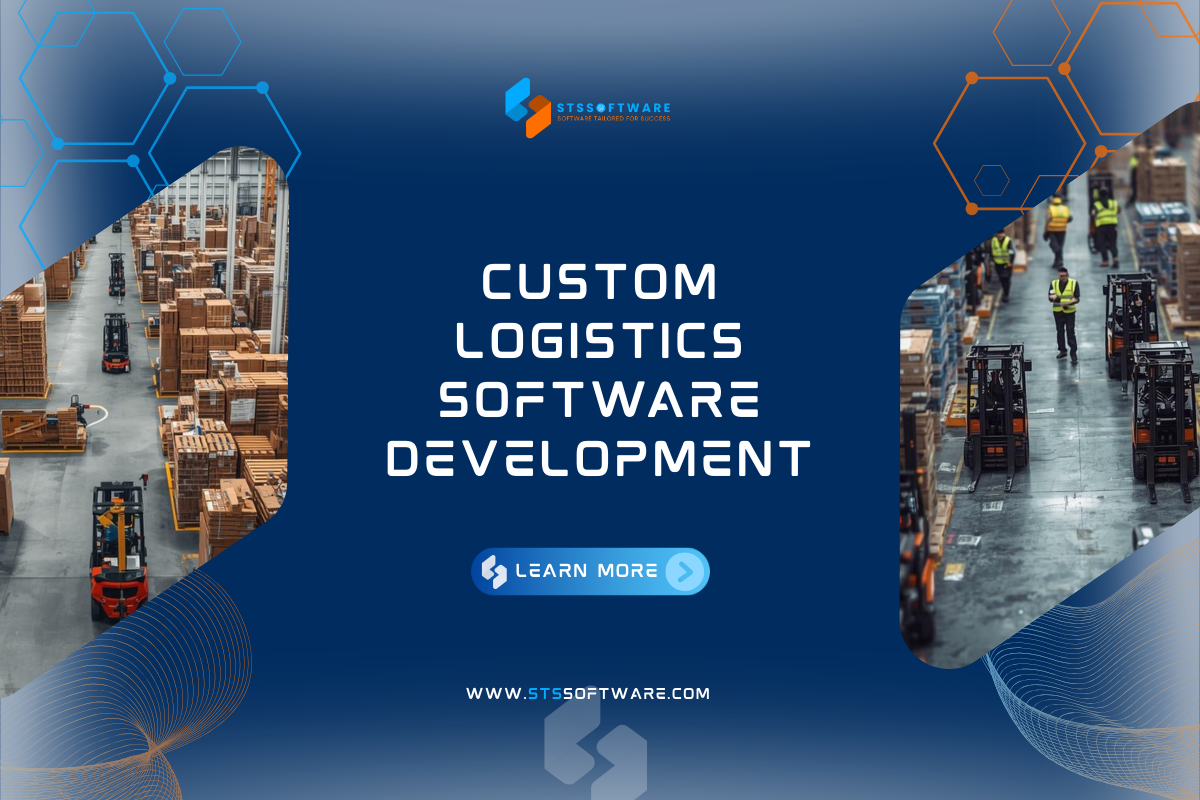
Are you tired of forcing your unique operations into the limits of rigid software? This guide covers everything you need to know about building a Custom Logistics Software Development solution—from why it saves money long-term and what features you need, to the exact process and costs involved in creating a system that truly works for you. Let’s dive into the STS Software guide and find the solutions for your business.
What is Custom Logistics Software?
Custom logistics software development is the process of building a specialized system just for your company, tailored to your specific needs—from fleet routes to warehouse layouts. Many logistics operations hit a wall with standard software that was never designed for their scale or complexity.
The goal of this customized process is simple: to automate shipping and freight forwarding activities, allowing transport companies to simplify freight operations, save time, reduce costs, and improve customer services.
While the most universal solution is often a Transportation Management System (TMS), a custom build ensures this TMS (and related tools) perfectly matches your real-world operations.
What The Difference Custom vs. Off-the-Shelf (COTS)?
Off-the-shelf (COTS) logistics software is generic. It handles basic tasks but can’t adapt to complex challenges like multi-region taxation or unique delivery sequences. A custom logistics solution, on the other hand, is built to support your specific, proprietary rules. This focused approach makes logistics custom software development a true competitive advantage.
Why Custom Tech is Key in Modern Logistics?
Custom logistics software development services are essential for achieving the level of control and transparency customers now demand, such as real-time tracking and precise delivery windows.
Core Functions: Fleet, WMS, and OMS
A strong custom platform often centralizes several critical systems into one spot:
- Fleet Management: Optimizing vehicle usage, maintenance, and driver schedules.
- WMS (Warehouse Management System): Handling inventory, accurate picking/packing, and storage location tracking.
- OMS (Order Management System): Automating order processing and fulfillment across all sales channels.
Key Benefits of Custom Logistics Software Development
If you run a complex logistics company, the value of owning your software is immense. It’s a strategic investment that yields clear returns across operations.
Cut Costs and Boost Operational Efficiency
The main goal of custom software development for logistics is to automate and streamline your workflows. By automating manual steps, optimizing routes, and efficiently managing warehouse space, you directly reduce costs related to labor, fuel consumption, and inventory errors.
Real-Time Visibility for Better Decisions
Stop relying on outdated data. Custom logistics management software development delivers real-time visibility into every aspect of your operation. This data allows managers to make faster, smarter decisions—whether it’s dynamically rerouting a truck or predicting stock replenishment needs.
Scalability and Flexibility Tailored to Business Needs
Your software should grow with you. Custom logistics software development builds on modern architecture that’s designed to handle massive increases in shipment volume, new service lines, or additional warehouses without forcing you into an expensive platform migration later on.
Improved Customer Service and Satisfaction
Customers expect complete transparency and reliable delivery. A tailored system lets you provide flawless service, including accurate delivery estimates and personalized tracking portals, which builds customer loyalty and trust.
Essential Features in Custom Logistics Software
Logistics custom software development project includes smart, interconnected features that handle every detail of the supply chain journey.
Real-time Shipment Tracking and Fleet Management
Your custom platform must offer precise, real-time GPS tracking for every vehicle and load. This includes features like geofencing alerts, automated maintenance scheduling based on usage, and tools to monitor driver performance.
Inventory and Warehouse Management System (WMS)
Effective inventory control is crucial. A powerful WMS should include barcode scanning, automated put-away rules, inventory consolidation, and support for complex tasks like batch tracking or cross-docking.
Smart Routing and Optimization
This advanced feature uses algorithms and predictive analytics to find the most efficient routes and shipment consolidations. The software factors in real-time traffic, vehicle capacity, driver hours, and strict delivery windows—optimization generic systems just can’t match.
Automation and Workflow Optimization (Order Management)
Reduce errors and processing time by automating the order lifecycle. The system should automatically match orders to inventory, generate shipping labels, and send updates to the customer and the accounting system.
Multi-client Support and Role-based Access
For security and clarity, your system needs fine-grained access controls. This ensures warehouse staff, drivers, external partners, and clients only see the data and functions relevant to their specific role.
The Step-by-Step Guide to Custom Logistics Software Development
Building a high-performance, complex logistics system requires a clear, professional approach from your custom logistics software development company.
Phase 1: Requirement Gathering and Discovery
This foundational phase involves deep collaboration with your team. We map out all your existing workflows, identify every pain point, and document every required feature to create a precise technical blueprint for the new system.
Phase 2: UI/UX Design Principles for Logistics Software
The software must be easy to use, especially on mobile devices for drivers and warehouse workers. The UI/UX design focuses on simplicity, large touch targets, and clear data visualization to maximize adoption and minimize training time.
Phase 3: Development Process (Agile, Iterative Delivery)
We use the Agile approach, building the system in short cycles called sprints. You receive functional pieces of the software frequently. This iterative delivery allows for constant feedback, ensuring the final product perfectly meets your evolving business needs.
Post-deployment Support and Maintenance
After the successful launch, the work continues. We provide necessary support, implement bug fixes, and conduct routine security patching to keep your custom logistics solution running smoothly and securely.
Read new article: custom healthcare software development
Technology Stack and Deployment Choices
The right technology choices ensure your custom logistics software development project is fast, reliable, and capable of handling future growth.
Common Programming Languages and Frameworks
For high-volume data processing and stability, backend systems often rely on scalable languages like Python or Java. Frontend interfaces are typically built using modern frameworks like React or Vue.js for excellent speed and mobile responsiveness.
Cloud vs. On-Premise Deployment Strategy
Most modern logistics applications choose Cloud deployment (using providers like AWS or Azure). Cloud services offer unrivaled scalability, global accessibility, and high built-in security standards, which is necessary for a growing operation.
Integration with ERP, CRM, and other Systems
Your custom logistics software development project must talk to your existing business platforms. We build secure APIs to achieve seamless integration with ERP, CRM, accounting systems, and external partner systems to ensure all data is consistent across your organization.
Cost Factors and Pricing Models for Logistics Solutions
When budgeting for a custom logistics software development company, you should view the cost as a long-term strategic investment, not just a one-time expense.
Factors Influencing Cost (Complexity, Features, Integrations)
The main drivers of cost are: the number of complex features (like AI optimization), the number of required external integrations (to ERPs, customs, etc.), and the size of the team needed. Highly specialized expertise for things like complex regulatory compliance also adds to the cost.
| Project Size | Focus | Budget Range |
|---|---|---|
| Small | Basic MVP, single function (e.g., simple routing). | $25,000 – $75,000 |
| Medium | Integrated WMS and basic Fleet Management. | $75,000 – $250,000 |
| Enterprise | Full platform replacement, AI, multiple complex integrations. | $250,000+ to $1 Million+ |
Pricing Models
- Fixed Price: Best for small projects with absolutely stable, non-changing requirements.
- Time and Materials (T&M): Ideal for complex, long-term logistics custom software development projects where scope adjustments are expected. You only pay for the hours worked.
- Dedicated Teams: You hire a full, specialized team (developers, project manager, QA) for a set monthly fee.
Choosing the Right Development Partner
Selecting the right custom logistics software development company is the most important step in securing your project’s success.
Key Criteria for Vendor Selection
Look for partners who offer transparency in their process, rigorous security protocols, and a commitment to long-term support. Ask about their communication cadence and project management style.
Importance of Domain Expertise in Logistics
Do not hire a generalist. You need a partner with deep domain expertise in logistics. They must understand industry terms, complex operational challenges (like demurrage or cold chain requirements), and compliance standards. This reduces project risk and speeds up the entire development lifecycle.
Client Testimonials and Case Studies
Always review case studies that show proven success with similar custom logistics management software development projects. Seeing how they solved problems like yours is the best way to vet their capability.
Why Choose STS Software for Custom Logistics Software
At STS Software, we don’t just write code—we build competitive advantages. We understand that in logistics, every second and every mile counts. When you choose us as your custom logistics software development service, you get more than just a vendor:
- Deep Domain Expertise: Our team consists of engineers who understand supply chain dynamics, LTL/FTL complexities, and regulatory compliance, ensuring your system is optimized for real-world operations, not just theory.
- AI-First Optimization: We specialize in integrating cutting-edge AI and Machine Learning to deliver truly smart features, such as predictive routing that learns from traffic patterns and automated demand forecasting.
- Seamless Integration Focus: We prioritize building reliable, secure integrations with your existing ERP, accounting systems, and external carrier APIs, ensuring your new custom system works harmoniously with your entire technology landscape from day one.
- Scalability Guaranteed: We architect your solution using modern cloud and microservices principles, guaranteeing your software can handle massive growth in order volume or geographic expansion without costly platform rehauls.
Emerging Trends Driving Future Logistics Software
The best custom logistics software development company looks ahead. Integrating these modern technologies ensures your system remains competitive for years to come.
AI and Machine Learning for Predictive Analytics and Demand Forecasting
AI can analyze historical data to accurately predict market shifts, seasonal demands, and inventory requirements. This drastically reduces safety stock levels and prevents costly stockouts.
IoT and Sensor Technology for Fleet and Warehouse Tracking
The Internet of Things (IoT) uses smart sensors in vehicles and facilities to monitor crucial conditions—like temperature in a cold chain or equipment fault detection. This allows for proactive maintenance and immediate intervention when cargo integrity is at risk.
Blockchain for Secure and Transparent Data Sharing
Blockchain provides an unchangeable, shared record of every shipment milestone. This increases transparency across all supply chain partners, simplifies auditing, and securely tracks sensitive data without relying on a single central authority.
Frequently Asked Questions (FAQs) About Custom Logistics Software
What is the typical development timeline?
A complex, multi-module system will typically take between 9 and 18 months from the start of the discovery phase to the final deployment. Simple projects (MVPs) can be launched in as little as 4 to 6 months.
How do we maintain and upgrade the software after launch?
You must have an annual maintenance plan. This covers essential tasks like security patching, bug fixes, third-party software updates, and minor feature upgrades.
What software is commonly used for logistics before custom development?
Before investing in a custom logistics software development service, companies often rely on commercial platforms like legacy TMS (Transportation Management Systems), basic modules within ERPs (like SAP), or specialized niche tools, often finding them too restrictive as they scale.
What are the 7 Rs of Logistics?
The 7 Rs of Logistics (or “seven rights”) represent the foundational principles used by professionals to evaluate the efficiency and effectiveness of a supply chain process. They serve as a checklist to ensure all steps in the delivery and fulfillment process are correctly executed.
The 7 Rs are:
- Right Product: Ensuring the correct item is selected for the order.
- Right Quantity: Delivering the precise amount of goods requested.
- Right Condition: Guaranteeing the product is undamaged and in perfect working order upon arrival.
- Right Place: Shipping the goods to the exact geographical location specified by the customer.
- Right Time: Ensuring delivery occurs precisely when expected or promised.
- Right Customer: Confirming the delivery is handed over to the intended recipient.
- Right Cost: Performing the entire operation at an optimal cost that maintains profitability and competitive pricing.
What Software is Used for Logistics?
The modern logistics industry relies on a suite of specialized software tools to automate and optimize the movement and storage of goods. These systems are typically integrated to provide end-to-end visibility:
- Transportation Management Systems (TMS): These are used to plan, execute, and optimize the physical movement of goods. A TMS handles functions like route optimization, carrier selection, freight rating, and load planning.
- Warehouse Management Systems (WMS): These manage the daily operations within a distribution center or warehouse. Key functions include inventory tracking, labor management, receiving, put-away, picking, and packing.
- Enterprise Resource Planning (ERP) Systems: Core platforms (like SAP or Oracle) that integrate all major business processes. They contain specific modules for managing inventory, procurement, and supply chain planning.
- Inventory Management Software: Dedicated tools used to track stock levels, manage reorder points, and create accurate demand forecasts.
What Programming Language is Used in Logistics?
There isn’t one single language that dominates, as logistics is a broad field encompassing everything from mobile apps to massive backend enterprise systems. However, certain languages are prevalent depending on the application:
- Java and C# (.NET): These are often the foundation for building large, scalable WMS and ERP systems due to their stability and object-oriented structure.
- Python: This is highly popular for data science applications within logistics, including route optimization algorithms, demand forecasting, and training machine learning models for predictive maintenance.
- JavaScript (Node.js): Used extensively for building modern, responsive web and mobile interfaces, such as real-time tracking dashboards and order management portals.
- SQL: While not a programming language, SQL (Structured Query Language) is crucial for managing the massive databases that underlie every logistics operation.
Is SAP a Logistics Software?
Yes, SAP is widely considered a leading logistics and supply chain software solution.
While SAP is fundamentally an Enterprise Resource Planning (ERP) platform—meaning it handles financial, HR, and manufacturing processes—its suite of Supply Chain Management (SCM) modules is specifically designed for logistics operations.
Modern versions, such as SAP S/4HANA Logistics, provide integrated functionality covering every aspect of the supply chain, including:
- Transportation Management (TM)
- Warehouse Management (WM)
- Detailed Inventory Management and Material Flow
- Order-to-Cash and Procure-to-Pay processes
Therefore, while SAP is a comprehensive ERP, its SCM component is a powerful and globally utilized logistics solution.
Conclusion
Custom logistics software development is the most effective strategy for businesses aiming for peak efficiency, deep visibility, and total cost control. By moving beyond rigid, generic software, you invest in a proprietary system perfectly suited to your operational complexity.
Ready to build a smart, scalable system that defines your market advantage? STS Software – Software Development Services specializes in creating high-performance custom logistics software development solutions tailored to the most demanding supply chain needs. Contact us today to start planning your custom platform.


Related articles
Custom Software vs Off-the-Shelf: What Are the Pros and Cons?
 Bruce Pham
  10 Dec 2025
Ultimate Guide for Custom Enterprise Software Development
09 Dec 2025 
Software Development Hourly Rates: Complete 2025 Enterprise Guide
03 Dec 2025 
Custom ERP Software Development: Cost, Timeline & Process
30 Nov 2025 
Custom Software Development for Startups
28 Nov 2025 
Custom POS Software Development: Cost, Process & Integration Guide of Point of Sale
27 Nov 2025 
Full-Cycle Custom Software Development – The Complete 2025 Guide
25 Nov 2025 
Custom Software Development Process: Step-by-step Guide for Business
25 Nov 2025 
Custom Banking Software Development Services: The Guide to Financial Industry
19 Nov 2025 


